• The Bakerloop

    Read all about TfL's latest Superloop route here!

  • The Electric Takeover

    Keep up with all the electric buses with London Connected!

  • About Us!

    Get to know the team who have been fuelling the blogging community for 10 years.

  • Service changes

    Keep up-to-date with the Tenders page or visit us on Flickr for additional content.

  • Back On Track

    Expanding our coverage from the bus scene to the rail network.

  • Busy Bus Buzz

    Everyone's welcome to join and share their opinions on London's transport scene. All the news, views and more daily on our chatbox. Powered by Chatango

Showing posts with label Borismaster Watch. Show all posts

The ELT Takeover

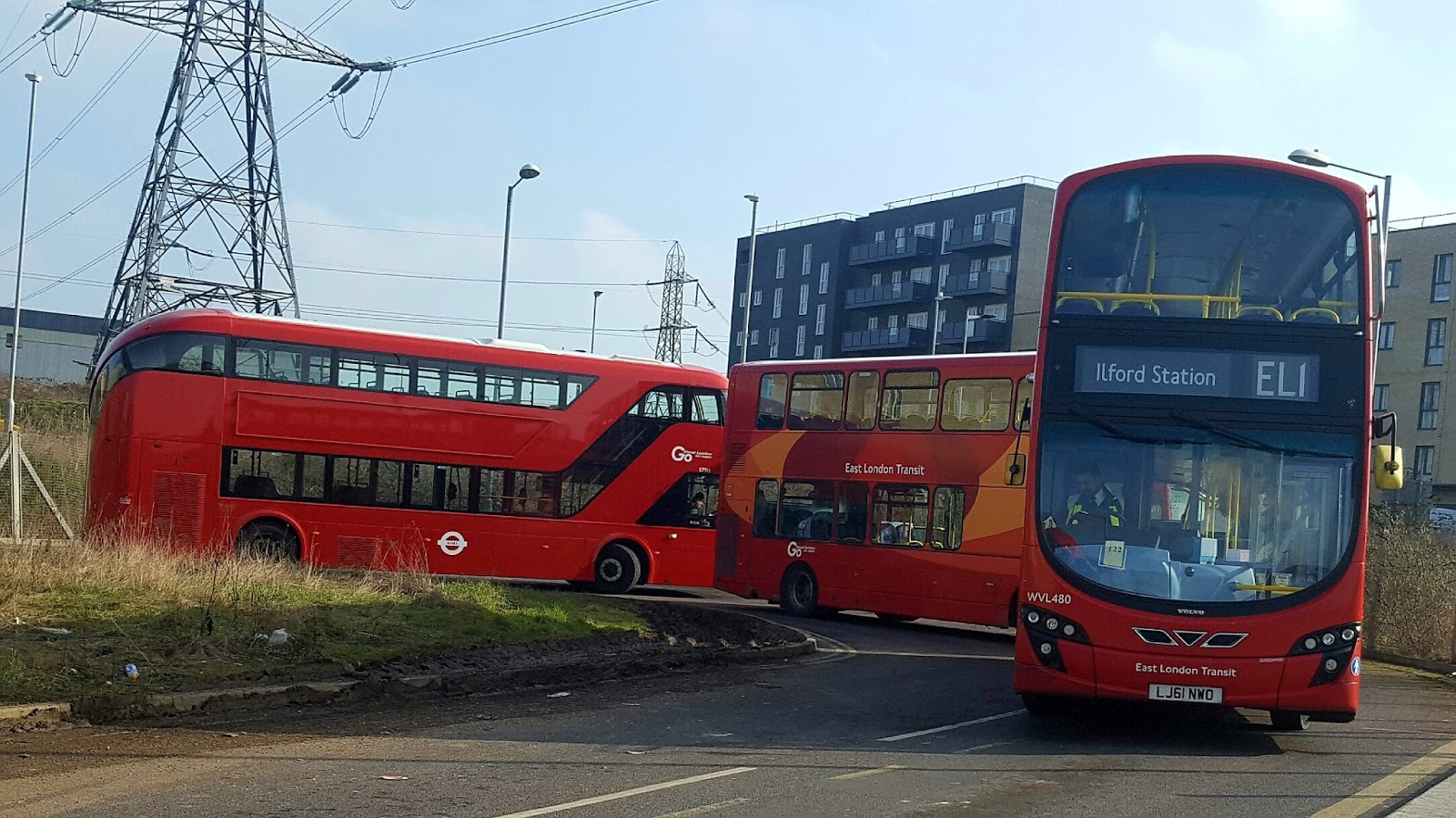
If you go back more than a year, you might remember my post on the extension of route EL2 to Becontree Heath. In today's post we re-visit Barking in another addition to the Borismaster Watch series, something which many might not have expected!

It's my first time writing a Borismaster watch article, and I must say The London Bus Breh has left a lot to live up to! Many of you may not know my opinion on the vehicles as a whole. I personally dislike the vehicles, I feel that it was a great concept executed very poorly. I was very supportive of the return of the open platform as well as the return of open boarding. However both concepts would only work effectively if there was a second member of staff on board the bus, which was the case for the first few conversions but as the second member of staff was dropped for all conversions taking place after route 38, the usefulness of the bus type also dropped.  All this was not helped by the other problems that this bus had, such as the infamous air conditioning and lower capacity than standard buses.


© EastLondoner
On the 29th of July 2016 I was simply minding my own business, however when I picked up my phone it was full of notifications. Realising that tenders had been released that day I immediately went to check them out. It wasn't until I reached the bottom of the long list of routes that I realised that the East London Transit routes had been awarded with the addition of new ELT route EL3. All routes were to be operated by Go Ahead London with New Routemaster buses. Route 387 was to be withdrawn. I didn't know what to say about the results, should I be sad? Should I be angry? or should I be optimistic?


19778 seen at Cambridge Road in Barking
© EastLondoner
I've already given you lot some information on the EL1 and EL2 in the post that I have linked above, but let me run through some information about route 387. Route 387 operated between Little Heath (a green area in Goodmayes) and Barking Riverside. It was run by Stagecoach London from their Barking garage. The route started in Barking Riverside and made its way through Thames Road, River Road and Movers Lane to reach Barking. Once it left Barking it would continue up Longbridge Road until Goodmayes Lane, then it would go up Goodmayes Lane until Green Lane. It would then continue up Goodmayes Road and Barley Lane and double run King George Hospital before making its way to Little Heath. 

The route was allocated with Enviro400s during its last few months of operation, however Enviro400 MMCs and Dennis Tridents worked the route almost everyday. Below I have included some photos of those buses on the route...


10332 is seen turning onto North Street, route EL3 doesn't serve this area
© EastLondoner

17904 is seen at King George Hospital a week before the changeover
© EastLondoner

However the the 387 isn't the only route involved in this set of changes, nor is it the only route in the area getting New Routemasters. As I mentioned earlier routes EL1 and EL2 are also being allocated with the vehicle type however, they are currently undergoing a phased conversion as opposed to an on the day conversion like the EL3 had. As I've already given you the information on those routes in the post linked at the top, let me just catch you up on happenings since then. Route EL2 nw runs between Becontree Heath and Dagenham Dock while route EL1 runs between Ilford Station and Barking Riverside.


WVL348 seen near Barking Station
© EastLondoner
The EL1 has certainly seen a huge increase in its passenger numbers, as has the 169. The EL2 has seen its popularity growing, with many people south of Barking also using the new link it provides (including me!) as well as people north of Barking using it as an alternative to the 5. Unlike the 387, routes EL1 and EL2 have almost no variety to their allocation through their 7 year history. Since inception in 2010 the routes have been allocated with Wright Eclipse Gemini 2 buses on the Volvo B9TL chassis. Every now and again over the years a few Optare Olympuses and Volvo B7TLs/Wright Eclipse Geminis have crept out onto the route (albeit with no blinds). 


WVL334 seen near the Weavers Quarter development
© EastLondoner
Coming back to more information on the change itself. The EL3 timetables were in place at bus stops more than a week before the service change, with all 387 tiles removed and replaced by EL3 tiles at the bus stop the Wednesday before the service change. Stagecoach London concluded the operation with 19777 performing the final trip to Barking Riverside early in the morning on the 18th of February. Route EL3 then started operation with the first bus running at 0500 on the morning.

With the EL3 being very local to me, I went out at around midday to take a ride on the route. The bus turned up a few minutes after I had arrived at the bus stop. LT911 was going to be the bus which would form my first two rides on the EL3. I boarded it going towards Little Heath. As soon as I boarded the "New Bus Smell" made itself known to me. The front two seats were empty, so I took the opportunity to sit there. There was a scrolling message on the iBus screen informing people about the changes to the 387. We set off from the stop and immediately went onto the route's new routing through Barking Town Centre, following the routing of EL1 and EL2 rather than the 387s previous routing around the town centre going via North Street and London Road. 


LT911 seen at Little Heath
© EastLondoner
We then swiftly moved onto Barking Station, where for the first time I saw some people boarding through the rear two doors as opposed to the front door. We then continued our journey up Longbridge road, barely picking up anyone until the end of the road just before the bus took the slight left onto Goodmayes Lane. We eventually reached Green Lane, an area I was anticipating because of the turns the bus has to perform here. The bus performed then with ease before over the bridge and across Goodmayes High Road onto Barley Lane. We then reached King George Hospital, the turn into the hospital grounds was quite tight here and we just about humped the curb, but the bus pulled all the other turns in the hospital grounds with complete ease. It should then be plain sailing to Little Heath...so I thought. Upon leaving the hospital grounds we were met with a traffic jam, reaching the A12. We took about 10 minutes just going the distance to the bus stand, in reality that should take 30 seconds. Upon arrival the position of the traffic along with the size of the bus stand meant that the 11.3 meter LT was not going to fit in at all, so the driver let us get off at the alighting point before proceeding to the first stop of the route to stand. 

I then used the opportunity for a few pictures before boarding the bus for the return trip to Barking Riverside. For the first part of the journey I filmed the bus from the lower deck (video can be viewed here) before making my way upstairs. We eventually reached River Road and entered Barking riverside. Most of the roads here are usually flooded with parked cars due to the various industrial areas as well as the bus garage located in the area. The bus navigated most of the turns and roads pretty impressively. As we entered the various housing estates in the area the turns started to get a bit tight, the bus continued to pull most of these off except the last turn from Galleons Drive onto Mallards Road, which to be fair is challenging in a normal bus. 


LT911 seen on stand at Barking Riverside
© EastLondoner
After spending some time at Barking Riverside with some fellow enthusiasts, I boarded LT881 for my journey back home. Overall a very good first day, considering the lack of turns on the route - as is common for a first day not to mention the decent service. There were a few gaps in the service but that will no doubt wear out eventually as Go Ahead get used to operating the route.

For the first few days of the EL3s operation, routes EL1 and EL2 which were also due to convert to the controversial bus type continued on with their existing Volvo B9TLs until more New Routemasters became available. It wasn't until the 2nd of March when the EL2 started its conversion to the bus type. I went out the next day to take a ride on the route, the route was converting pretty fast with only three Wright Eclipse Gemini 2s out on the day.


LT885 seen at Becontree Heath Bus Station
© EastLondoner
I made my way to Becontree Heath Bus Station to get the route. The bus station was overcrowded (like usual) with LT885 parked on the western side of the bus station prior to departure. After a few minutes the bus departed and we set off on our journey to Dagenham Dock. The bus didn't attract as much attention from any of the passengers like route EL3 did during its first few days of operation. We made our way around the corner onto Wood Lane before being met with the traffic lights at Dagenham Heathway. At this point the driver got a call from the garage to turn the bus to River Road, Waverley Gardens (The turn for River Road Bus Garage). We made out way down Wood Lane, past Valence Avenue and Bennetts Castle lane before being greeted with a hefty amount of traffic at the Lodge Avenue junction. After a lot of waiting we made it through the traffic lights and continued along Longbridge Road at a steady pace towards Fair Cross. Around this point we started to get quite a handful of fare evaders, no doubt who had become used to the presence of these buses on route EL3 which parallels the route along this section. We made it to Barking Station, however I got off at Vicarage Field Shopping Centre to get some lunch, and so that I could wait for another EL2, which would be doing the full route. 


LT909 stands at Dagenham Dock Terminus
© EastLondoner
Upon getting off, I realised that LT907 which was behind also was turned to River Road, as well as the bus behind it. I then gave up waiting for the next bus to Dagenham Dock which was going to be over 30 minutes away. So far from my experience, the EL2 was just continuing business as normal with its new allocation. Nothing much had changed about it, the route didn't feel too different to how it felt when it used Gemini 2s and the passengers didn't really care about the "state of the art" buses that had started to appear on the route. It wasn't until many weeks later I got around to riding an EL2 down to Dagenham Dock. LT909 was my bus, we set off from Barking with me as the only passenger until Movers Lane where a few more people boarded. The bus made the turn onto Bastable Avenue far better than I expected. All the other passengers got off along this stretch, leaving me the only passenger as we went onto Renwick Road and then Choats Road on our way to Dagenham Dock. This part of the route is very industrial, although it did give me an opportunity to see how far the development of Barking Riverside had come. The new Riverside school building was taking shape very nicely, as well as a new bus stand (more on that further on in the post). We reached Dagenham Dock Terminus a few minutes later. I was the only passenger on the bus by this point and it wasn't surprising to see why. There's literally nothing there besides a train station with a service every 30 minutes. However when more housing is built, this link could very well become more popular.


LT907 takes stand time at Becontree Heath
© EastLondoner
Route EL1 was to be the last ELT route to convert to New Routemasters. The EL1 was going to be the route which would show how the New Routemasters could really benefit the ELT service. The route is very popular at Barking and Ilford, ferrying people between the two major town centres. Most of the time a bus would arrive at its second stop in Ilford and not be able to depart until the next bus would roll up behind it due to the sheer time it took for the huge crowds of people to board the route. The open boarding on New Routemasters could potentially solve this issue. 


LT889 seen on stand at Ilford Hill
© EastLondoner
It was on the 8th of March when the first New Routemaster crept out onto the EL1 for three hours in the morning peak, however due to other commitments I didn't even notice this was out until the evening. In the days following more New Routemasters started performing duties on the route, however this was mostly in the evening. It was on the 27th of March when I made it to Ilford on my way home to be granted with LT889 on stand at Ilford Hill. It wasn't too long until the bus departed and we were on our way towards Barking. When we arrived at the infamous Chapel Road bus stop (known very well locally for its crowds and never ending stream of people) people used all three doors to board. I did initially worry about this as the never ending stream of people could mean the driver would struggle to close the doors, however it certainly wasn't the case. The bus loaded up much quicker than the Gemini 2s did. It wasn't too long before we set off and made our way down Ilford Lane towards Barking. This is probably the most popular part of the EL1 route despite only being around 6 stops long in total, but the EL1 itself isn't a very long route at only 4 miles. Many people along Ilford Lane made use of the open boarding and dwell times at bus stops were greatly improved. I got off in Barking as time wouldn't allow me to ride the EL1 down to Barking Riverside. 


LT883 seen in Barking
© EastLondoner
Since my first ride, on the EL1 I've caught many more New Routemasters on the route, sometimes being intentional, but mostly being completely unintentional. Even before the EL1 became a New Routemaster operated route, I'd always suggested that it should be an open boarding route. It carries a huge amount of people for short distances. It's high frequency and huge crowds used to lead to buses constantly bunching throughout the route. With the New Routemasters this is no longer an issue, people board the bus within a minute and the bus sets off from the stop. I may hate to admit it as I'm still not a huge fan of the bus, but the New Routemasters are right at home on the EL1. 

When the initial consultation results were released for the introduction of the EL3, TfL did announce that all vehicles on the ELT network would be branded, much like how the Wright Eclipse Gemini 2 buses that previously worked the routes were. When the New Routemasters were introduced, they all entered service without any branding, fully red. However through July and  early August the advert frames on the buses were removed, showing that the buses were still going to be branded. LT939 was the first bus to be branded, it entered service with its branding on the 7th of August 2017. The branding is similar to that previously used on the old allocation, although modified slightly to accommodate the design differences of the New Routemaster.


LT939 showing off its branding on the EL1
© EastLondoner
The final stage to these set of changes were to happen on the first week of September. The routes were to be extended further into Barking Riverside, past the location of the new Riverside School building to stand where the new Barking Riverside Station would eventually be opened in the early 2020s. Route EL3 was going to be rerouted slightly so that it would run along Minters Road (a new road) and most of Thames Road would be left unserved. The extension to routes EL1 and EL3 would also involve a new busway, something quite rare for London (the only other busway is found at North Greenwich and it is to be removed soon) as well as a new road called Drovers Road.


LT927 is seen in Barking on the EL2
© EastLondoner
Although as has probably become expected by this point, the roads were not finished on time, route EL1 would become the only route to be extended and that would only be as far as Riverside school. Route EL3s extension was delayed until June 2018 which was the new date set for the opening of the new roads. Route EL1s extension would also only be effective on weekdays between the hours of 6am until 9pm, and at other times the route would be curtailed at its current stand. However due to the operating times of this extension, and the fact I'm usually occupied during the times of its extension I have been unable to grab a photo of the area there. However do keep an eye out for another post next year when the EL1 and EL3 are extended further into Barking Riverside.


LT925 seen in Barking on the EL3
© East Londoner
Meanwhile, what's next for the New Routemaster buses?

The much anticipated (or maybe dreaded) final bus is approaching. These buses are expected to form the bulk of the allocation for another suburban conversion - route 267 which operates between Hammersmith and Fulwell. However with all the cuts TfL are making to bus routes in Central London don't be too surprised to see another one in the future.

Borismaster Watch Catch-Up

Pushing through a declining enthusiasm for reviewing the so-called 'LT' routes, the London Bus Breh catches up with all the conversions of 2016 and into 2017.

A Bundle of Laughs in the City

The 149 converts, the 78 introduces a new alternative, the 168 gets LTs after all and the 159 moves away from its heritage with Arriva to Abellio: all in one article!

Lower Tier vs. The Elite Hybrid

Metroline have introduced LT543-563 to headquarters Cricklewood (W) to convert route 16 to 'New Routemaster' service.

A General Balance

Go-Ahead London: London General introduce their second batch of 'New Routemasters' to Stockwell (SW) for route 88.


The Newington Routemaster

Arriva London have introduced LT356, LT464-477, LT488-500 and LT517-542 to Stamford Hill (SF) for route 73.


A Difficult Phase Made Fun

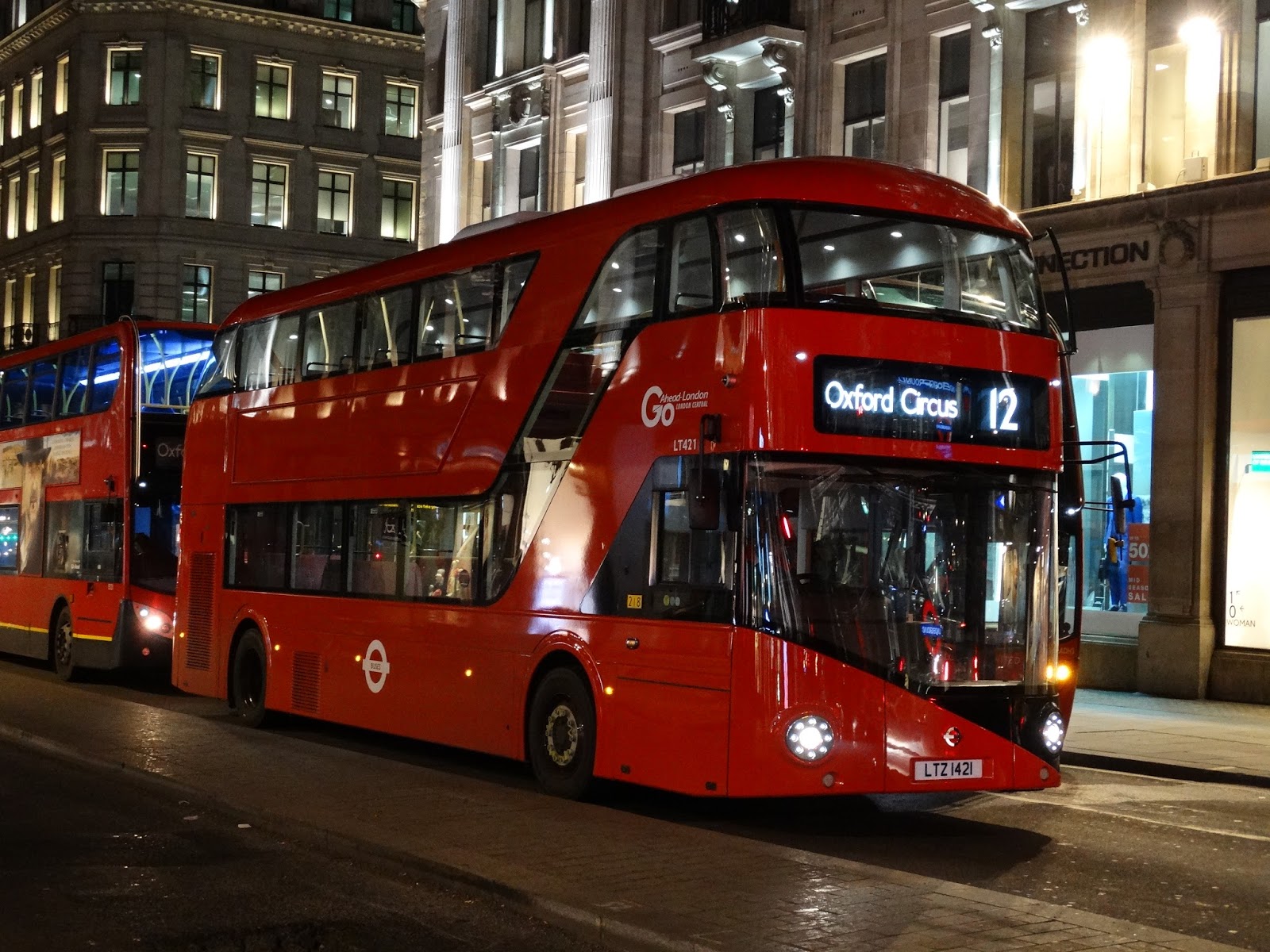
Go-Ahead London introduce their first 'New Routemaster' hybrid buses to Camberwell (Q) for their London Central route 12.


The Stagecoach Masters

Bus routes are being selected more frequently for allocation of the 'New Routemaster' hybrid bus and since the last article, there have been three converts: Stagecoach routes 55 and 15 respectively, and Go-Ahead London route 12 (coming soon).


Route 55 was retained by Stagecoach: East London with 'New Routemaster' hybrid buses on 28 February 2015, however the delivery of batch LT317-356 for the route was surprisingly early.

The routeing takes you through the faster sections to the business end of central London after exiting the busy-ness of the shopping district of Oxford Street. One of few routes to duck towards Old Street from the Holborn area, the route is more or less a straight line via Shoreditch and Hoxton until the Cambridge Heath, Hackney and Clapton area where traffic is encountered and the fun straight line acceleration is given a break. The acceleration is afresh for the long Lea Bridge Road towards the end of the route at Leyton.

Previously allocated with Alexander ALX400 bodied Dennis Trident 2 buses and with Scania OmniCity double-deckers common to the route, I was unusually happy with this route selection for 'New Routemaster' operation, a contrast to my usual neutral or unimpressed view on TfL's choice of conversions. The Scania buses made the 55 a route compiled with ageing buildings, a few parks and generally rundown scenery. Nothing could be exciting about route 55, which is surprising considering I normally take interest to the agility of Scania buses in London.

The 'New Routemasters' were a complete modernisation and revival of the seemingly sedating route 55. After the expected traffic along New Oxford Street, we made a brisk dive into Clerkenwell, passing its glossy glass business buildings through the spacious and traffic-free roads the evidently recently constructed layout had to offer. Quite a tranquil section of the route, with very little standing times at bus stops if we did need to stand at a bus stop for passengers, the bus was providing a comfortable and fast experience as we returned to traffic congested roads at Old Street and Hoxton.

The journey was consistently fast as I recognised just how boring the scenery of route 55 was on approach to Hackney and Clapton, taking away full blame on the Scanias. However, these 'New Routemasters' kept me awake the whole journey. My favourite section was easily the Leyton approach after Clapton Pond: whilst traffic was reduced to agonisingly gradual speed back towards Clapton, we were coasting past the much more scenic greenery along Leyton Bridge Road and before I knew it, I was in Leyton getting off from what was a comfortable and swift service well done.

The last full-route attempt on route 55 with Scanias had me resort to taking the much more fun route 56 to east London. Funnily enough, with 'New Routemasters', the 55 seemed faster and, even with cloudy weather, kept a bright atmosphere throughout the whole journey, nevertheless. You know why that was funny? Because I only took the Scania to Clapton Pond - not even the full route. Not to be particularly harsh on a Scania bus, but the marmite-reviewed 'New Routemasters' have completely outshone its predecessors in service surprisingly with more improvements than the service of route 137 when it disposed of its noise-polluting DWs for its own batch of LTs back in December 2014. Most Scania OmniCity double-deckers have been withdrawn (15147-15169), however some have stayed at Leyton (T) for sporadic service on rotues 48, 56, 215 and 275 (15125-15146, 15170-15175).

On the official date of contract renewal for route 55, by then a number of LTs already in service, 'New Routemasters' for route 15 were due to start service. Starting late, route 15 brought in a few buses from new batch LT391-416, 462-463 into service on 2 March.

But let us not forget the interesting hybrid collection of 12128-12153, an outstanding fleet of hybrid buses purchased in early 2012 that started service on route 15, replacing those excellent ALX400 bodied Trident 2 buses that replaced the iconic Routemasters on the route. These batch of hybrid buses are the only Stagecoach buses in London to consist of a green and yellow interior colour scheme and gives the buses a completely different feel aboard, suitably accompanying the vigour of the buses. With LTs now being delivered for the 15 and the new Alexander Dennis Enviro400 MMC hybrid buses no longer to be purchased for the service change of route 56, what would be more of an equally exciting prospect than to allocate batch 12128-12153 to the 56?

My first encounter with the new LTs was traffic-ridden. Waiting around the Strand and Aldwych for a 15 to finally escape the heavy congestion, I was quite annoyed to see the Aldwych bus stop for the 15 closed with no temporary bus stop available. However, all buses were parking at a stop further down so I thought there would be no problem with the 15 doing the same. But of course the one bus out of all two hundred that I actually wanted to catch did not bother follow the sensible actions of the drivers around them. Taking no prisoners, I sprinted to the London School of Economics, by arrival having sprinted out all my anger ... lucky driver. The evening did not get any better, getting off at St. Paul's and walking further along the 15 route for an LT back to Trafalgar Square. I'd reach Cannon Street before one arrived to drive straight past me and leave me in slight melancholy as I waited for another 15 to arrive: a hybrid from route 205.

Notwithstanding this quite demotivating attempt, I tried again: but I started off with the predecessors now on route 56. The new buses gave the service a fresh new look. Okay, the drivers were not on the accelerator as much as they had proven with the Scania OmniCitys previously allocated to the route, but the quality and tranquility of the service had improved extravagantly since. The driver, slightly perplexed about why her bus was being photographed so often recently but full of buoy after I explained I was a bus enthusiast (and not someone from TfL!), she was happy to tell me how the braking system allowed more thinking time, providing a safer driving experience. A bit intrigued by that, since all Scania buses have very sharp brakes, I acknowledged the immense improvement to the comfort of route 56 before I got off at St. Paul's and prepared for another try of the new buses on route 15.


This time, the route was diversion-ridden. Full of them. However, the quality of the journey was good. Looking at the speedometer, I was surprised to find the driver was only going at 20mph, because it sure felt faster than that! The smooth driveline proved beneficial for steering as a number of times where I expected the driver to lift off the accelerator he proved me wrong. Taking bends and corners, therefore, was equally as enjoyable as speeding through the straights of east London. Except for the crowded atmosphere and the initially standee experience on a 'New Routemaster', I was quite happy with the service.

For those of you who don't know about route 15 - shake your head in shame. Since 2009, route 15 has been curtailed more times than it has deserved. Losing all kinds of acknowledgement as a proper London bus route, it was initially withdrawn from Paddington Basin to start back at Regent Street to decrease the amount of red along Oxford Street. No-one has noticed the reduction of London buses on Oxford Street and we do not care about statistics, either. A further curtailment last year in 2014 saw the route curtailed to Trafalgar Square, completely ridiculing the lost popularity of the route in central London's shopping and tourist hotspots.

Anyway, when the bus becomes to that time when it needs to be withdrawn after picking up the whole of Trafalgar Square, route 15 takes the normal routeing of any London bus that does not stop at Aldwych from the Strand towards Fleet Street en route St. Paul's, Cannon Street, Monument, Tower of London and Aldgate. It is a long fast straight to Blackwall from here, taking you past the London Metropolitan University, Limehouse and Poplar before the route arrives at Blackwall Station.

Now for a consultation to return the route to its  terminus at Paddington, maybe? A new deserved routeing via Regent Street, Great Portland Street (route 453), Marylebone (route 205) and the A40 Harrow Road (route 18) ... hint, TfL? Do it.

© All rights reserved, London Bus Breh 2015.
See our About Us page for photo use enquiries.

Wright from Wrong

Route 137 is now London's tenth 'New Routemaster' convert, Arriva London introducing LT317-356 from Brixton (BN).


The 45free returns

Route 453 is now the second London General 'New Routemaster' route, the second ex-bendy bus route and my first local route to be allocated with the state-of-the-art buses.

undefined

Route 453 is one of our youngest London bus routes, introduced by Selkent on 15 March 2003 on the same weekend the congestion charge was introduced. Creating a south-east London link from Regent's Park and helping prevent overcrowding on fellow Selkent route 53 in the process, the 453 is a very useful route that parallels the Bakerloo Line from Marylebone, serving every station on the Bakerloo Line until its last stop at Elephant & Castle, meeting route 53 en route in Westminster. Route 453 then parallels the 53 until its terminus at Deptford Bridge Station, where the latter continues on to Plumstead Station.

Interestingly, the Deptford Bridge terminus today had been postponed from development for three years after the introduction of route 453. Consequently, buses were forced to run empty to Lewisham to turn around and stand off-peak. There was a proposal for the route to be extended to Catford Bus Garage to ease this longevity, but by the time the proposal could be consulted the Deptford Bridge terminus by the DLR Station had been fully developed for standing vehicles on the 453. One wonders what was there before that withheld the 'development' of such an almost effortlessly simplistic terminus.

Route 453 was awarded to London General from Selkent in 2008 with a
new batch of Mercedes-Benz Citaro O530G articulated buses (MEC).
Proposed to be a bendy-bus route from initiation, these buses were delivered a few weeks late, enabling double-decker Dennis Trident 2 buses to introduce the 453 to service until the articulated Mercedes-Benz Citaros could enter service.

On 16 February 2008, London General won contract to route 453 from their Mandela Way (MW) base with new articulated buses. Over three years later, the 453 was debendified with Alexander Dennis Enviro400 buses, some of which were late and covered by a few Plaxton President and Wright Eclipse Gemini buses until they entered service.

Late this summer, there were talks of route 453 converting to 'New Routemaster' operation in October. This was confirmed with a planned date for 4 October 2014. This being a year frequented with tardiness, this date was pushed to 18 October 2014. By this date, all buses from new allocated batch LT273-311 had been delivered. However, on the day, only six new buses had been introduced to service, following rumours of a further postponement by a week. Notwithstanding a limited introduction, route 453 is my first local Borismaster route hence I easily caught up with the route's new buses.

Route 453 was debendified with Alexander Dennis
Enviro400s (E163-201) on 24 September 2011.
Following route 8, my opinions of the controversial ultramodern 'New Routemaster' had become neutral. Yes, they are over-priced, over-advertised conventional buses with an avant-garde design, however recent batches have been progressive in performance, as seen with routes 8, 38 and 148. Be that as it may, I was a bit sceptical ahead of the 453 conversion, even if this was to be the first full batch of Euro VI LTs: the fact that these buses are implemented with their own interior livery and not that of the operator housing the buses (as is the case with every other bus type in London) was getting a bit boring now. The only differentiation between each conversion is literally a different route and depending on the operator, a different logo. Additionally, I had become accustomed to naming the LTs 'Wright Borismaster hybrid' buses (as they probably would have been called if not so 'special'), Wright being the manufacturer, Borismaster being a logical name for a bus initiated by Boris Johnson inspired by the Routemaster, hybrid the power running the bus. Transport for London confirmed the name of the buses as 'New Routemaster', something I don't agree with, hence (admittedly) stubborn inverted commas upon every mention.

And on the day, the weather was dull, dulling my mood, complete with initially dull photography attempts. Moreover, there were only six LTs on the 453 on its proposed first day of 'New Routemaster' service. This was not a convincing start to having a 'New Routemaster' on my doorstep ... that was until we left for Deptford. All we had to do was depart the route's stand and start on Great Central Street and turn onto the Marylebone Road for my mood to improve. The driver of LT278 was expeditious along Marylebone Road, traditionally my favourite section of the route for requiring speed just to maintain pace with traffic with its broad three lanes in both directions. However, the 453 was going through an unusually unsatisfactory frequency, meaning standing at bus stops was lengthy to pick up accumulating groups of waiting passengers. In reference to a showy new advert I heard on the radio the other day, the 'New Routemaster' having three doors was not benefiting stand times at bus stops!

The driver attempted to maintain a fast and comfortable drive en route to the West End, however our departure from the Marylebone Road was not as great as the arrival, with a cyclist holding us back from making the lights accessing Albany Street towards Great Portland Street Station. To make matters worse, an insect began irritating my attention of analysis, flying about with its uninvited presence. By the time I had reached the busy shopping district that is Oxford Circus, I was beginning to lose patience with this procrastinate assembly; encountered was the general ignorance of people in West End poking parts of their body onto the road in a personal battle to get to the next piece of pavement first, in doing so tempting us to run them over.

If you have read Stagecoach Shambles?, you will have noticed my déjà vu experiences on route 53 where a 12 would hold us up from accelerating over Westminster Bridge. Well, I had this yet again on the 453! However, our hold up was short-lived as the 12 double-indicated at Lower Marsh, so we overtook the bus with ease, a contrast to previous encounters with slow buses on the 12!

LT278 (LTZ 1278) parking at Deptford Bridge.
Other than the further elongated standing times at bus stops, one including a few people walking slowly towards the bus to make the driver think they were just average pedestrians, thus closing the doors on them, before protests forced him to undergo the exertion of opening all doors again ... sighs with exasperation ... the duration of Westminster Bridge Road was a thrill! Peckham Park Road was a treat, with less traffic to manouevre than last time with the 53, and soon I was off the bus at Deptford Bridge Station, taking plenty of photos after a scintillating bus ride.

After further gallivanting around southeast London, I returned to Deptford to make my way home on a 453. However, the aforementioned unimpressive service of the 453 that day meant, if I did not catch a 53 after approximately ten minutes of waiting, I would have been possibly waiting another ten minutes for an Enviro400 on the 453 to finally decide to leave its stand after a selfishly long break.


LT275 and LT294 entered service with Uggs advertisement a
few weeks after proposed conversion date, during in which the
453 service was still predominantly Enviro400 allocated.
The 453 has two buses fully painted in white with Uggs advertisement on. These entered service a few weeks after proposed conversion date, during in which the 453 service was still predominantly Enviro400 allocated. After getting a photo of one in Piccadilly Circus, I took a 453 home. This would be my second journey aboard a new 453 and this would have been a relaxing cruise home, if not for LT284 overtaking us along Regent Street; if not then for a one-stop in advance curtailment to Great Portland Street Station. Luckily, we kept up to LT284 to transfer onto that bus. As annoyed as I was having to run in the drizzle along the wet road surface, it was worth it: LT284 was a brief but brilliant journey home. I was a bit concerned about how the slightly longer length of the 'New Routemaster' would be able to get to the Great Central Street bus stand in Marylebone with a series of tight corners beforehand. However, the driver executed the turn-ins with ease and completed another scintillating bus ride on the 453, a luxurious way to arrive home.

With its smooth and speedy driveline, little AC noise pollution and clearer engine sound similar to that of a go-kart, the only problem I had with this bus was the addition of yet another unnecessary announcement. But not from the iBus this time, no, no: from the doors. 'Please mind clear of the opening doors.' There is barely any room near the rear platform to dive out of the way of the unexpected sharply inward opening door in the first place; that is unless you somehow maintain balance on the spiral staircase - as the G-force of the bus attempts to throw you around in the Marylebone Station approach - and then rocket forwards out of the door as quickly as possible just so the driver doesn't close the doors on you because the rearview mirrors are clearly as useful a presence as a Routemaster with no conductor. Yeah.


In Stage Eight, I was having difficulty placing route 8 in my Borismaster hierarchy. Between the last article and this one, I had been on route 8 again with its 'New Routemaster' buses a number of times, and these experiences were less exhilarating as a commuter than when I boarded them for the first time as an enthusiast. Therefore, there's no longer a chance for the 8 to be at the top when routes 148 and 38 respectively have been flawless. Where the 9 has not been fast all the time, they are still good buses on a good service, therefore the 8 slots in fourth just ahead of the 453, which has been let down not by arguably the best batch of buses in the LT fleet, but its service: many curtailments, some unexpected, and on the weekend in particular the service has been less reliable than it was before.

As for the bottom of the hierarchy, my opinion of route 11 continues to improve - maybe because glimpsing at a 'New Routemaster' on route 10 reminds me of the batch's lethargic existence, hence route 11 climbs further up the hierarchy. The 10 may even be giving the generally negatively reviewed conversions of routes 390 and 24 (in order of hierarchy position) a chance to surpass!

Next is Arriva London route 137 from Brixton (BN), with an unscheduled date this month. Its buses have already arrived, a Euro V batch presumably due to being built before the 453 buses. Do you think route 137 has a chance of knocking off the 453 in top five of our 'New Routemaster' performance hierarchy as it becomes our tenth 'New Routemaster' route?

Stage Eight

The Borismasters venture east as Stagecoach London route 8 becomes the eighth to convert to New Bus for London operation.


The Multi Phase

Arriva London introduced eight prototypes of the new Routemaster project to the 38 in 2012. Now they are fully introducing the ultramodern buses to London's most frequent route.

The epicentre of Lea Bridge Roundabout in Clapton is the terminus for routes 38 and 308.
A new Borismaster stands next to an existing bus on the 38, driver as happy as the weather.
From Clapton Pond to Victoria Station, Hackney's best performing route of the year has the highest peak vehicle requirement (PVR) in London, requiring approximately seventy buses to accommodate a frequency of every two minutes within a reasonable distance of seven miles. By curtailing every other bus to Hackney Central near the bus garage half-housing the route with Ash Grove (AE), this decreases bunching of buses at the Clapton terminus.

Route 38 became an articulated service on 29 October 2005,
replacing its renowned AEC Routemasters. Its bendy-buses
were withdrawn on 14 November 2009. ©Steven Hughes.
In comparison to its articulated service, route 38 never used to be as frequent as it is now. The extremely high capacity of the Mercedes-Benz Citaro O530G (MA) articulated buses allowed the route's peak vehicle requirement to be reduced to forty-seven buses. It was then increased to around seventy buses when Wright Gemini 2 bodied VDL DB300 (DW) buses were introduced as part of Boris Johnson's plans to rid of the oppressed bendy-buses. Okay, but why am I going down memory lane of route 38? Have you not noticed that, while Boris Johnson persistently campaigned about replacing bendy-buses with new Routemaster buses, it has taken until the seventh 'New Bus for London' route conversion, two years after the service inauguration of the Borismasters, to replace a route that did actually used to be allocated with articulated buses?

Everybody who has read my articles here will know about my two hour wait in Terminus Place, Victoria, for the first Wright Borismaster hybrid to enter service on 27 February 2012. Notwithstanding the bus at full capacity right from the off, full of enthusiasts, journalists interviewing passengers throughout the journey, and normal commuters of the route engulfed in the immense publicity, it was one of my most favourite journeys on a Borismaster, looking back and comparing experiences that follow two years later on other routes gaining the 'privilege' of such an allocation. However, one would wonder why route 38 had not been fully converted to Borismaster operation before any other route - certainly before the controversial conversion of route 24.

A few of the new batch entered service a few
weeks early. Prototypes were re-registered
in January and are still in service.
The supposed date to enter service was confirmed as 10 May 2014, however we saw a handful start service a few weeks prior: in April to maintain service reliability and stability during the second Tube Strike of the year. Most notably entering service was LT176 (LTZ 1176), which continued service after the Tube Strike and into the due date for Borismaster conversion, disregarding the momentary weekend discontinuation of the new batch of buses, until the next week saw their return and a few more Borismasters started entering service on the still predominated Wright Gemini 2 bodied VDL DB300 route 38. 

Talking of predominance ... before 10 May, an announcement stated that route 38 would be a phased conversion, similar to route 11 ... which meant we were not be to be too optimistic about this one. 10 May arrived, and as I checked to see how many Borismasters had started service today I was slightly taken aback to see that more standard Wright buses were in service than there was during the whole week where Borismasters were not even supposed to be on the route!

We boarded LT181 (LTZ 1181). The driver was a 'senior citizen' - to be politically correct about this - and with drivers having just finished training in the new buses with likely traffic in Piccadilly in consideration, I was not really expecting anything from this part of the journey. However, there was barely any traffic on any part of the route. Notwithstanding the immense cautious-like driving, perfect driving for when under instruction but not meeting the in-service expectations an average passenger would have, it was good to have company whilst we cruised through the suburban sections of central London through to Islington, where I was to proceed the journey to Clapton by myself. If I had gone by myself throughout the whole experience, no doubt the sporadic weather conditions and the average to slow speed of the bus would have made this review rather mixed. However, somehow the driver managed to drive at average speeds in a cruise-like fashion, rather than monotonously, with there being no traffic in the central London hotspots of Piccadilly and Holborn, and even if traffic was present, I would have been in enthused conversation whilst passing the scenic hotspots.

There was a driver change at Mildmay Park, the termination point for customer assistant duty on the route (absent on weekends, hence I had no 'conductor' aboard my journey). A younger driver replaced the senior driver, and he was much more faster yet the bus still glided along the road surface maintaining journey comfort and satisfactorily fast speeds to Clapton Pond.

Entering the Hackney traffic, the rain started pouring down momentarily but as we escaped into Clapton just before I alighted at the Lea Interchange Roundabout (last stop) sunlight re-emerged from the rain clouds just as the showers lessened, creating a rainbow. I hoped for the Borismaster to leave Clapton in time to capture a photo with it passing in front of the rainbow, however I couldn't so instead tried to compensate with a comparison shot of a Wright-bodied VDL and Wright Borismaster alongside each other on the same route (refer to photo one of article). Just before departing for Victoria, the driver did the unthinkable when he invited me into the cab of the Borismaster, requesting my camera in doing so. Man looked like a boss behind the wheel! For a shortage of Borismasters out on conversion date, this legend made my day. He soon departed for Victoria after a lengthy off peak and I re-embarked LT181 (LTZ 1181) back to central London, where the journey was just as fast as it was en route Clapton Pond from the driver change at Mildmay Park until we got to Angel, where we caught up and remained staring at the rear of the standard 38 ahead all the way to Piccadilly Circus.

But that was not all: route 38 has been promised around twenty new black-painted Borismasters as part of promoting the 2014 World Cup in Brazil. It took two weeks for one to enter service; their entrance into service was unexpected, as many were assuming them to enter service much later in June after Transport for London did a preview on the new buses. I could not say the two-week wait was worthwhile, but it is something new. Being a dark paint colour, they are hard to photograph but they are worth adding to your photo collection.

So after three phases, hence the title 'The Multi Phase', of Borismaster entries on route 38 - the Tube Strike, the official date for conversion which turned into planned twenty-day phase-in plan, and the entrance of the Adidas advertised buses - it is time to conclude.


My first ever experience back in 2012 and on (official) day one of Borismaster service on the 38 exceeded expectations and compensated for any flaws that tried to get in the way of both pleasant experiences. Even in summer 2012, it feels me with positive sentiment remembering when I took my mum on a short journey after chasing after one and boarding it between stops at a traffic light on an indelibly nostalgic sunny day in Bloomsbury; this was back when open-boarding was available at all public-suited times and all customers assistants were nice enough to be classed as conductors like the good days.

Before routes 10 and 38, I had been on routes 9 and 148 again, and I have to say that route 148 has always performed flawlessly every time whilst the 9 has either been slightly slower, more packed or provided small problems such as the doors having momentary faults, albeit being resolved quick enough to continue service. Its service also varies: sometimes it'll be fast journey, other times slower.

Therefore, after plenty thought, I have now realigned my Borismaster performance hierarchy to put at the top the consistently fast and excellent performance route 148, followed by the fullthrottle coaster of route 38 and then the favourable route 9. Route 10 follows as an average, agonisingly slowly driven but problem-free experience, before the controversial but now improving service of route 11 overtaking the boredom stricken route 390, leaving the controversially pointless conversion of route 24 last. I wonder where I'll put route 8 on 28 June 2014 - will it outperform the 38, do you think?

Hot Demand

The two-week consecutive conversion programme started today, route 10 becoming London United's third Borismaster route.

The Sneaky Phase

London United are now the second bus operator to attain two batches of Wright Borismaster hybrids, the fleet code LT120-147 for their Shepherd’s Bush (S) route 148. Due to convert on 15 February 2014, drivers of the 148 had already experienced what it is like behind the wheel of these futuristic-looking state-of-the-art innovations before conversion date, and I’m not just referring to driver training.


Two weeks ago saw this year’s first Tube Strike take place, perpetrating a startling increase of demand for buses. Extra bus services were introduced with a number of reintroductions of iconic AEC manufactured buses as well as loaned entrances of buses from other parts of the UK. Also involved in extra bus services were a number of Borismasters allocated to the 148 to increase the route’s frequency around its heavily congested tourist attractions and landmarks, one of which served Stamford Brook (V) route 9.

Au Morandarte caught up with LT127 (LTZ 1127), one of the
first Wright Borismaster hybrids to be phased onto route 148
on 12 February 2014. Seen at Shepherd's Bush Station.
Also sneaking onto the 9 during the Tube Strike was LT150 (LTZ 1150), a stylishly painted chrome Borismaster in advertisement and celebration of the Year of the Bus, this year being sixty years since the first iconic Routemaster was manufactured, seventy-five years since the first RT-type bus was launched and one hundred years since the B-type bus went frontline during the First World War.

On 15 February 2014, route 148 fully converted to Wright Borismaster hybrid service, succeeding the Scania OmniCity double-decker buses which will be making their way from Shepherd’s Bush (S), assumedly to Fulwell (FW) when London United retain routes 71, 281 and 681 in July. A shock introduction saw LT150 (LTZ 1150) appear on the route before returning to Stamford Brook (V) onto route 9 the following day - could you class this as the first Borismaster odd-working?

Customer service is always at its best with London United, and it's not a surprise
to read that another friendly driver has allowed enthusiasts to change the blinds of
their buses. Seen destined on route 148 for Elephant & Castle (curtailment) on Aldwych.
Many thanks to ©JLV Photography for his cooperation in the article's production.
More photos and videos, including destination board changes, can be found on Flickr and YouTube.
Marble Arch, Westminster, Camberwell and White City were where I wanted photos of the 148. Although I did see Borismasters at Marble Arch on the 148, I was more preoccupied on getting some scenery pictures on Westminster Bridge where I have already a few photos of buses passing the Big Ben and Houses of Parliament. Finishing in Westminster, I caught LT125 (LTZ 1125) to Camberwell. The journey was very smooth and the iBus System was of the same crystal clarity highly praised in The Masters Meet. The only negative criticism I could give all day was that Emma Hignett (the iBus System voice, if you didn’t know), just talked a bit too much. On approach to almost every stop, she just had to say the same old boring balderdash that people only bother to pay attention to the first time they hear it: ‘Watch out for traffic when leaving the bus’, ‘You must touch-in with your Oyster or contactless card as soon as you board’, ‘You can board and alight from any door’ – like there are any conductors or windows to stop us from doing otherwise.

But let me not rant, because I had a soothing afternoon with the 148. I took LT134 (LTZ 1134) from Camberwell Green to White City Bus Station, my first full journey on the 148. It’s a very fast route, taking generally traffic-free fast roads – I have never been on a Borismaster so fast! However, due to the smoothness of the bus as it glided over bumps on the road at fast speed, it limits the thrill of the journey: the adrenaline usually accompanied with the knowledge that the bus is going fast is absent when on a Borismaster. There were also some great sights provided throughout: the aforementioned landmarks of Big Ben and Parliament Square, a diversion which introduced me to the location of the Home Office on Marsham Street off the Horseferry Road near Millbank, City Hall near Victoria, and the personally more familiar Marble Arch and Kensington Gardens. On top of that, the driver was not ramping with the accelerator!

The journey was so smooth that I was forced to take a nap, so I did not get to analyse much. But don’t worry, a frequent viewer of our blog and Shepherd’s Bush (S) driver of the 148 compensates with a review of his own regarding the latest conversion from behind-the-scenes and wheel:

‘We had bus shortages, hence an extra ten buses (Borismasters) were needed during the Tube Strike. The Tube Strike was good in the sense that some LTs had minor faults when they went out into service so you could imagine the impact on the service if this was launch day. LT137 (LTZ 1137), for example, experienced various technical issues including storage computer errors and a flat battery. They are nice to drive, but I know my colleagues will miss the SPs.

‘We have reputable people that board with fare evasion at a low, so drivers are quite annoyed with the fact of having no conductors as it will damage the reputation of a high profile route. One thing that has got my attention with the new Routemasters, the whole engine start procedure is absolutely ridiculous, taking about five steps to start the bus whereas a Scania OmniCity takes only two. You would think moving into a modern era, things would get simpler but the Borismaster already fails at that.’


Many people have been praising this conversion, saying how calm and, to the public anyway, how insufficiently problematic Wright Borismaster service has begun on route 148 and I can see why. So where does this put the 148 on my Borismaster performance hierarchy? Second, behind the simply outstanding performance of route 9 and ahead of the quiet route 390 conversion.

London United will become the first operator to receive more than two batches of Borismasters this year. So far, I think it is safe to say that London United are currently outperforming Metroline and Go-Ahead London with their Wright Borismaster hybrids – will route 10 continue this great run of form? We shall see on 26 April 2014.